Sermorelin Peptide Cost: A Lab Procurement Guide for 2026
Understand sermorelin peptide cost drivers, compare research-grade pricing, and learn procurement best practices for labs in 2026.
Independent 2026 market trackers show sermorelin research pricing ranging from $1.50/mg to $47.50/mg, with a market median around $7.20/mg. That spread is the point, sermorelin peptide cost isn't a single number, it's a market structure shaped by packaging, seller type, and documentation quality.
For a lab director, that means the first quote is rarely the final one. A low sticker price can still turn into a high acquisition cost once batch verification, shipping conditions, and usable mass are factored in.
Understanding How Sermorelin Peptide Costs Vary
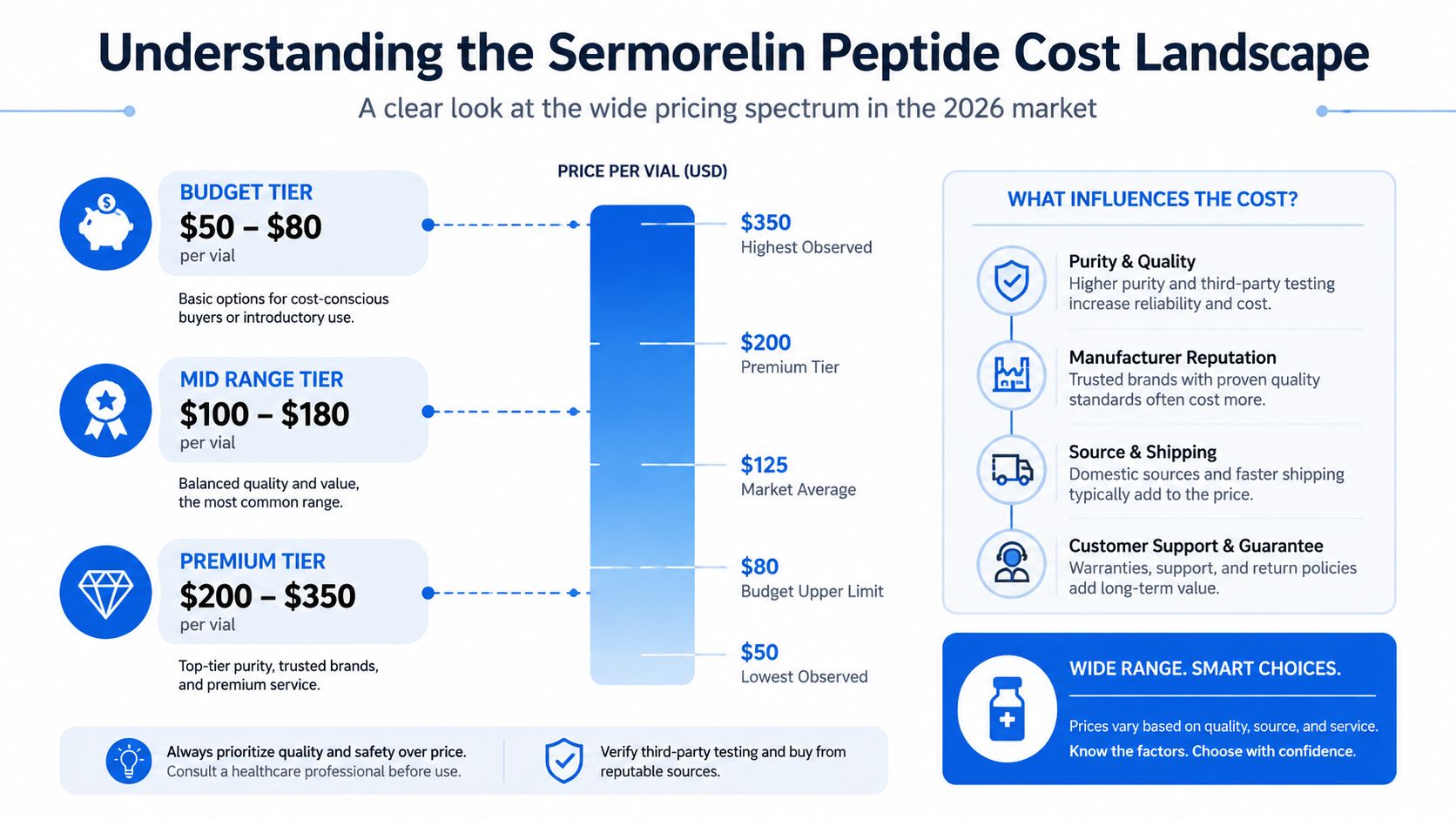
A clean read on sermorelin peptide cost starts with the fact that quoted price is only one part of acquisition cost. In 2026, independent trackers showed a wide spread of offers, including one comparison of 392 sellers with prices from $1.50/mg to $47.50/mg and an average of $9.53/mg, another tracker's market median of $7.20/mg across 78 vendors, and a separate comparison across 59 vendors that put the cheapest tracked price at $3.90/mg and the priciest at $15.00/mg (2026 market comparison).
That spread matters because it reflects more than seller markup. A lab is comparing packaging, seller tier, and whether the material is research-grade or bundled into a service model. The gap between $1.50/mg and $47.50/mg is more than a 30-fold gap, so sticker price alone says little about what is being bought (2026 market comparison).
What the spread really signals
The range points to market structure, not random volatility. Larger listings can reduce unit cost, while seller tier can move the same compound into a different bracket entirely, especially once the price is normalized to mg rather than vial sticker price (packaging and vendor tier analysis).
Practical rule: normalize every quote to usable mass per mg, then compare documentation, storage, and shipping on top of that.
That is the only reliable way to avoid false bargains. A vial that looks cheap can become expensive if the buyer must re-verify identity, replace degraded material, or resolve missing paperwork.
Key Factors That Drive Sermorelin Pricing
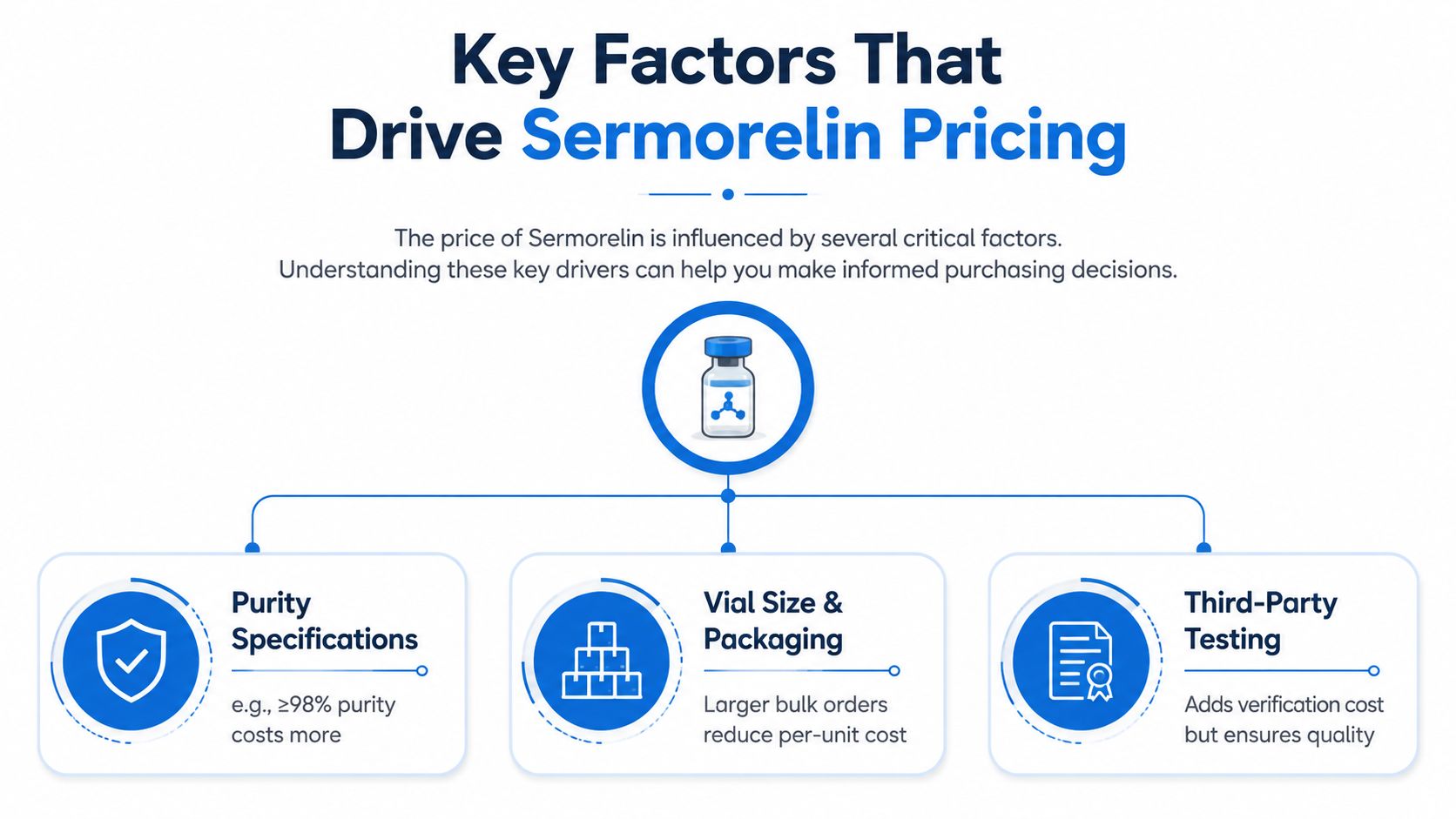
Three drivers shape most meaningful price differences: purity specification, vial size and packaging economics, and third-party testing. Each one changes not only what the buyer pays, but what the buyer can trust downstream in assay planning and recordkeeping.
Purity changes both price and reproducibility
Higher purity usually costs more because the producer has to do more work to isolate and verify the material. Public product frameworks that spell out purity minimums and batch-level quality controls are the right reference point for procurement teams comparing “cheap” with defensible material.
Packaging can make the same compound look cheaper
A larger vial can have a lower per-mg cost even when the total spend is higher. That is why comparing a 10 mg vial against a 100 mg listing only works if the team normalizes to mass, not package price, and checks whether the larger format fits the experimental plan (research-market dispersion by vial size).
Larger formats can make procurement look efficient on paper, but only if the lab can use the material before storage, handling, or stability becomes the limiting factor.
Testing adds cost, but it cuts uncertainty
The highest-priced offers often include more than peptide mass. Batch documentation, identity confirmation, and full-panel quality checks add cost, but they also reduce the chance that a low-price lot becomes a failed run or an unusable archive sample. For a lab, that is risk control, not overhead.
Research-Grade vs Clinically Bundled Pricing
Research-grade pricing and clinically bundled pricing answer different questions, so they should not be compared as if they were the same product class. Research pricing centers on peptide mass, purity tier, and batch documentation. Clinical pricing folds in prescribing, monitoring, dispensing, shipping, and program overhead.
| Pricing Model | What's Included | Typical Cost Range | Best For |
|---|---|---|---|
| Research-Grade | Peptide mass, batch documentation, and seller-specific quality controls | Varies by vendor and lot structure, with trackers showing $1.50/mg to $47.50/mg and a median around $7.20/mg (market tracker) | Labs, assay development, procurement teams |
| Clinically Bundled | Consultation, monitoring, dispensing, shipping, and program overhead | Commonly $150–$400 per month, with some concierge models at $300–$600+ per month and promotional telehealth entries around $79 to $99 per month (clinical pricing guide) | Patient-facing service programs |
The procurement mistake is treating a lower monthly figure as a lower acquisition cost. A bundled plan can bury consult fees, labs, and dispensing charges in one line item. A research quote can look expensive until the buyer separates out service overhead that does not belong in a lab workflow.
Purity tier matters here because it changes both price and risk. Higher documentation standards usually cost more, but they also reduce uncertainty about what arrived, how it was handled, and whether the lot can support repeat work. Batch records and cold-chain handling can add cost before a vial ever reaches the bench.
A separate 2026 market summary placed single-month vials around $99 to $225+, with some longer tiers reducing the cost to about $6.67/mg (market comparison). That tiering helps clinics structure offers. Procurement teams still need to separate medication-only pricing from all-in service pricing.
How to Evaluate Supplier Quotes Responsibly
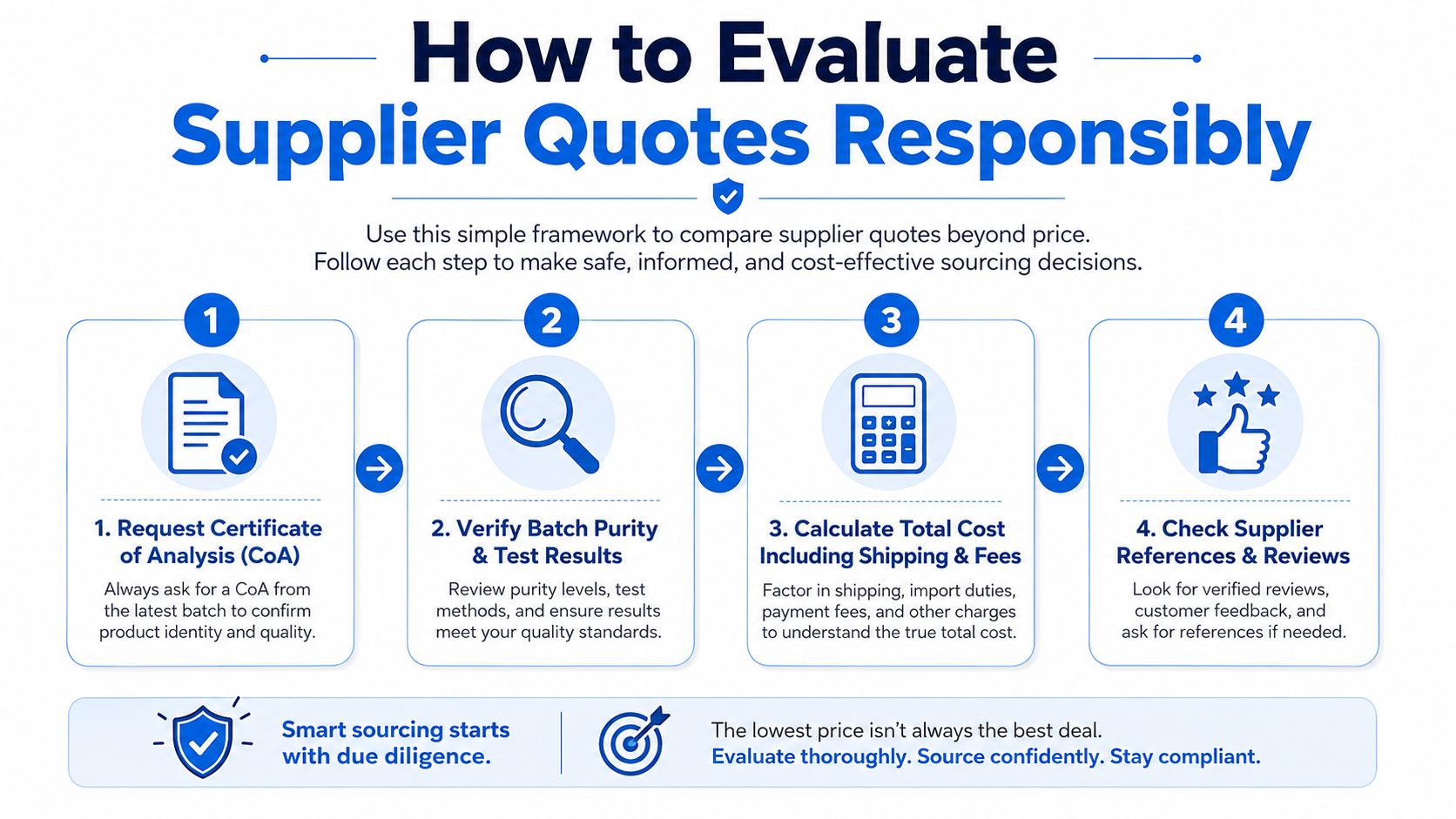
A supplier quote is only useful when it answers the questions procurement needs answered. The first pass should focus on batch identity, testing depth, and the total landed cost, not just the face value of the vial.
What to request before approving a quote
- Certificate of Analysis. Ask for the batch-specific COA, not a generic product sheet.
- Purity and test results. Confirm identity, purity, net content, sterility, endotoxins, heavy metals, and conformity.
- Shipping and fees. Calculate the landed cost, including cold-chain options, handling, and any order minimums.
- Supplier traceability. Review documentation access, support responsiveness, and whether the lot can be matched to the delivered material.
What should raise concern
If a quote is significantly below the field and comes with weak documentation, it usually means one of two things, either the seller is leaving quality controls out of the price, or the buyer is paying later in re-testing and delays. Missing batch data is not a cosmetic issue, it blocks reproducibility.
Document first, buy second. If a vendor can't tie the material to a specific lot and test panel, the quote is incomplete.
The best suppliers make the evaluation process boring. They show the lot, the test panel, the storage requirements, and the shipping method up front, which shortens approval cycles and reduces internal back-and-forth.
Connecting Procurement to Research Reproducibility
Procurement choices show up later in the data, even when the connection is easy to miss. A lot with weak documentation can force a lab to spend extra time reconciling source records, and that friction becomes a reproducibility problem when another researcher tries to repeat the same work.
Batch-specific COAs matter because they let a team tie a result to a specific material record instead of a generic product name. That matters even more for compounds that are sensitive to handling, because cold-chain shipping and rapid processing reduce the chance that the sample arrives in a degraded state.
The practical link is straightforward. If the lot is undocumented, the experiment becomes harder to defend. If the lot is documented but the shipment is mishandled, the result may still be difficult to trust. Procurement and reproducibility are the same conversation from two different angles.
When labs standardize on structured sourcing, they also make audits easier. Purchasing teams can show what was bought, what was tested, how it was shipped, and why the selected vendor met internal standards. That is a stronger posture than chasing the lowest visible price and hoping the rest works out.
The Total Cost of Ownership Approach
The cheapest per-mg quote is not always the cheapest purchase. Shipping delays, re-testing, missing batch records, and material loss can make a bargain quote more expensive than a more transparent supplier.
That is why total cost of ownership beats sticker-price thinking. A vendor with stronger documentation, clearer handling, and optional cold-chain support can reduce the hidden costs that usually don't appear until the lot is already in the lab.
The procurement question should be simple and unsentimental, what does the buyer pay to receive usable material that supports the intended workflow? Once that question is answered, the price comparison becomes much sharper.
A low-cost quote without batch verification is a risk transfer, not a savings event. The lab takes on the burden of proving identity, defending chain of custody, and absorbing any failure caused by poor handling or unclear specs.
Practical Procurement Checklist and Next Steps
A solid purchasing process for sermorelin should start with a short checklist and end with a clear paper trail. The team should ask for the batch COA, declared purity, storage requirements, shipping method, and the full landed price before approving the order.
It also helps to standardize comparisons across vendors. Use the same mass unit, the same documentation requirements, and the same handling standard every time, then keep a record of which supplier delivered the cleanest approval process and the least follow-up work.
- Ask for batch-level proof. Generic documentation isn't enough.
- Compare landed cost, not sticker cost. Include shipping, handling, and any service fees.
- Check quality depth. Identity, purity, sterility, endotoxins, heavy metals, net content, and conformity all matter.
- Require clear storage and shipping terms. Temperature-sensitive materials deserve better than vague fulfillment promises.
- Keep the workflow repeatable. A standard review form saves time on the next order.
For lab managers, the win is not finding the lowest number. It's building a sourcing process that makes the next order easier to approve, easier to audit, and easier to reproduce.
Pro Tec Pep supplies research-use-only compounds with batch-verified documentation, transparent specs, and logistics built around laboratory workflows, which makes it a practical fit for teams comparing sermorelin peptide cost on a true total-acquisition basis. For labs that need clear COAs, cold-chain options, and repeatable sourcing rather than just a low sticker price, visit Pro Tec Pep to review the available research catalog and procurement details.