10 Cold Chain Shipping Boxes for Peptides
Compare 10 cold chain shipping boxes for peptide research, including reusable, single-use, VIP, EPS, sizing, temperature profiles, and selection criteria.
A laboratory team has a small peptide vial or a 5 mg research pack ready for dispatch. The payload occupies little physical space, but the shipment still needs documented protection across storage, pickup, sorting, handoffs, and final delivery. A low-cost insulated box may appear sensible, yet an oversized carton can waste refrigerant and increase freight volume, while an underqualified pack-out can expose the material to temperature excursions.
The useful comparison isn't “which box is coldest?” It is whether the complete system matches the temperature range, protection duration, payload footprint, refrigerant or PCM design, reuse model, procurement process, and documentation requirements. Standard cold-chain systems may target 2°C to 8°C, controlled room temperature, frozen conditions, or deep-frozen profiles. FedEx temperature-control guidance lists chilled, controlled room temperature, and frozen ranges used in logistics.
Pro Tec Pep offers optional cold-chain handling and product-level storage information for research materials. This comparison evaluates the packaging choices themselves. It doesn't make compound-handling or human-use claims. The strongest choice is the smallest validated system that protects the actual research payload through its intended lane.
1. Peli BioThermal Crēdo Cube and CoolGuard
Peli BioThermal gives procurement teams two distinct directions. Crēdo Cube is a reusable passive platform built around vacuum insulation panels and phase change materials, while CoolGuard provides single-use parcel configurations. The portfolio addresses refrigerated, controlled room temperature, frozen, and deep-frozen requirements, making it relevant when one laboratory ships different material classes.
The thermal architecture matters more than the brand name. VIP reduces heat transfer, while PCM is selected to buffer a defined temperature profile. Product configurations are commonly positioned for multi-day protection, with some systems extending through 96 to 168 hours depending on the model and qualification profile. Those figures should be treated as configuration-specific, not as a universal promise for every payload.
Best fit for repeat laboratory shipping
Crēdo Cube suits organizations that can manage return, inspection, refurbishment, and redeployment. That can make a reusable system operationally sensible for recurring shipments, but only when the receiving network reliably returns the asset. CoolGuard is simpler for one-way fulfillment and may fit laboratories that don't have an established reverse-logistics process.
The main trade-off is footprint and cost. VIP and PCM systems can protect a small vial without requiring the same volume of insulation as a basic EPS kit, but the premium may be difficult to justify for a short, low-risk lane. Peli BioThermal also supports online ordering for selected models in the United States, which can reduce procurement friction.
Procurement question: Can the receiving site return a reusable shipper in time for the next scheduled shipment?
For product-level storage information and shipping conditions, procurement teams can review Pro Tec Pep shipping and returns information. The relevant decision is whether the shipment needs long-duration passive protection or just a validated short transit.
2. CSafe Softbox MAX, PRO, and EPS
CSafe's Softbox portfolio is useful when a laboratory wants several performance tiers rather than one prescribed shipper. Softbox MAX and PRO address higher-performance parcel requirements with VIP and PCM designs, while Softbox EPS provides a more economical path for suitable lanes. The portfolio includes refrigerated, controlled room temperature, and frozen configurations.
That range can help a procurement manager avoid buying a premium system for every shipment. A short ground lane carrying a small vial may not need the same thermal architecture as a shipment exposed to weekend dwell, seasonal heat, or uncertain handoffs. The qualification profile, payload arrangement, and refrigerant conditioning still determine whether a model is appropriate.
A portfolio approach to right-sizing
CSafe publishes datasheets across its parcel products, which helps teams compare insulation, payload volume, and intended duration before requesting a quotation. The company also presents reusable systems and recycling guidance, giving sustainability a place in the purchasing discussion rather than treating it as a separate project.
The weakness is administrative. Many SKUs are quote-based, and public pricing may not provide a quick cost comparison. Reusable models also require reverse logistics, asset tracking, and a defined decision for damaged or delayed returns. Those tasks can outweigh the packaging savings when shipments are infrequent.
CSafe's parcel solutions are therefore most relevant to laboratories comparing cost, performance, and support coverage across several lanes. The right choice may be Softbox EPS for a straightforward short shipment, or a VIP and PCM model when a small payload faces a longer or less predictable route.
3. Cold Chain Technologies EcoFlex and KoolTemp
Cold Chain Technologies offers one of the broader temperature portfolios in this comparison. EcoFlex provides reusable parcel systems, while KoolTemp and GTS families cover refrigerated, controlled room temperature, frozen, and deep-frozen applications. That breadth matters for research organizations that ship more than one type of material and want a common supplier relationship.
EcoFlex is positioned as a reusable system with lifecycle documentation, including environmental impact analysis. The GTS, GTS-Rx, and GTS-PUR lines provide pre-qualified configurations for chilled shipments, with published profiles extending across 48 to 96 hours or more, depending on the configuration. CCT also lists options reaching below -60°C, which places it in a different category from ordinary gel-pack boxes.
Strong coverage, more configuration work
The advantage is clear for teams that need both routine refrigerated shipping and occasional frozen or deep-frozen dispatches. Accessories and coolants available through United States stock can simplify replenishment. Sustainability programs and refurbishment options also support procurement teams that need to document reuse rather than only compare purchase prices.
The drawback is selection complexity. A system can be technically suitable yet operationally awkward if the laboratory doesn't know the required payload volume, coolant arrangement, conditioning procedure, and return path. Many configurations are quote-based, so early technical discussion is often necessary.
Cold Chain Technologies is a strong candidate when temperature coverage matters more than the simplicity of an off-the-shelf box. For a small peptide vial, the critical test is whether the selected insert and refrigerant arrangement protect the payload without creating unnecessary outer volume.
4. Sonoco ThermoSafe Certis, Via, Nomad and VIP solutions
Sonoco ThermoSafe has a broad parcel catalog, from seasonal systems for routine chilled shipping to VIP-based solutions for longer or more demanding profiles. The Certis, Via, and Nomad families give laboratories several ways to approach refrigerated, controlled room temperature, frozen, and dry-ice shipments.
This breadth can support a tiered shipping policy. Standard refrigerated parcels may fit a cost-optimized seasonal pack-out, while a shipment exposed to extended dwell or higher ambient risk may justify VIP and PCM protection. The company also offers rental options and digital support through ThermoSafe Connect, which can be relevant when a laboratory needs visibility without permanently owning a large reusable fleet.
A practical option for standard parcel lanes
ThermoSafe is particularly relevant to teams with recurring 24-to-72-hour refrigerated shipments, provided the selected model has been qualified for the actual lane and payload. A five-milligram vial doesn't automatically require the smallest catalog shipper, because coolant placement and thermal mass still need room. It does, however, make oversizing easier to identify during a pack-out review.
The main purchasing challenge is discovery. Product information is spread across product pages, distributors, and support channels, while public pricing is limited for many models. That makes specification control important. Procurement records should identify the exact shipper, coolant set, payload arrangement, and qualification profile rather than only recording the supplier name.
Sonoco ThermoSafe parcel solutions suit laboratories that value catalog depth and distributor support. They may be less convenient for teams seeking transparent online pricing and a single, simple pack-out for every shipment.
5. va-Q-tec va-Q-one
va-Q-tec's va-Q-one is built for situations where thermal performance and outer-volume efficiency carry more weight than the lowest unit cost. The single-use shipper combines VIP insulation with PCM and is available in payload sizes ranging from approximately 4 to 298 liters, depending on the model. That range includes compact options that can prevent a small laboratory payload from being surrounded by avoidable empty space.
The platform covers refrigerated, controlled room temperature, frozen, and deep-frozen profiles. Published configurations include 96-hour and longer qualification profiles, with options for 2°C to 8°C, 15°C to 25°C, frozen ranges from -15°C to -25°C, and profiles reaching -70°C or -40°C, depending on the system.
When compactness justifies premium insulation
VIP panels are valuable because they provide strong insulation without requiring the same wall thickness as some conventional foam formats. For a small vial, that can improve payload-to-outer-volume efficiency. The benefit is not just that the package stays cold longer. A compact package may also reduce the amount of unused internal space that the refrigerant must support.
The trade-off is procurement. va-Q-one systems generally cost more than basic EPS alternatives, and United States purchasing often proceeds through partners. Lead times can vary, so the shipper should be selected before a recurring program begins rather than during an urgent dispatch.
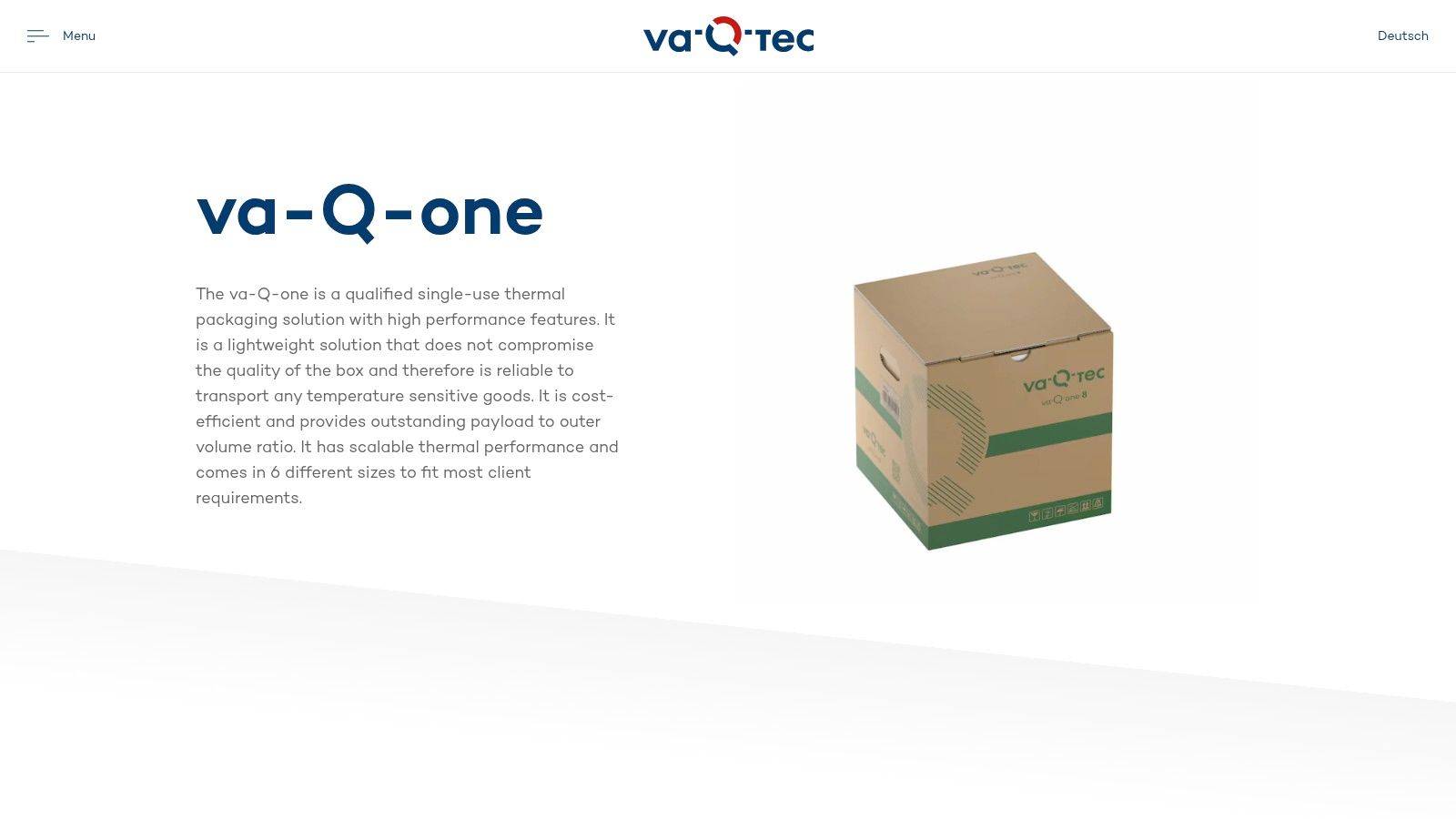
va-Q-one technical information is especially relevant for high-risk lanes where a longer passive window or smaller outer package could justify the additional spend. Qualification should still be checked against the actual pack-out, not inferred from the insulation type alone.
6. TemperPack qualified shippers
TemperPack takes a different route from VIP-heavy systems. Its qualified shippers use paper-based and plant-based insulation, including Green Cell Foam, to address the end-of-life problems associated with conventional EPS. The portfolio is intended for pharmaceutical and specialty-pharmacy shipments across frozen, refrigerated, and controlled room temperature profiles.
The systems are described as pre-qualified against ISTA seasonal profiles, with protection commonly positioned within 36 to 72 hours depending on the design and shipping conditions. That makes the range more relevant to short and moderate lanes than to a high-risk route requiring the longest passive duration.
End-of-life handling becomes part of the specification
For laboratory procurement, the sustainability value depends on what happens after delivery. A paper or plant-based liner may be easier to dispose of than EPS, but the receiving site still needs clear instructions for separating, recycling, composting, or discarding each component. A better disposal story doesn't remove the need to confirm thermal performance under the intended route.
TemperPack's in-house thermal validation and ISTA-oriented qualification support a more evidence-based comparison than a generic “eco” label. The limitations are equally practical. Publicly listed SKUs are fewer, and many purchases are quote-based. Shorter maximum duration also makes the product less suitable for shipments with uncertain delays.
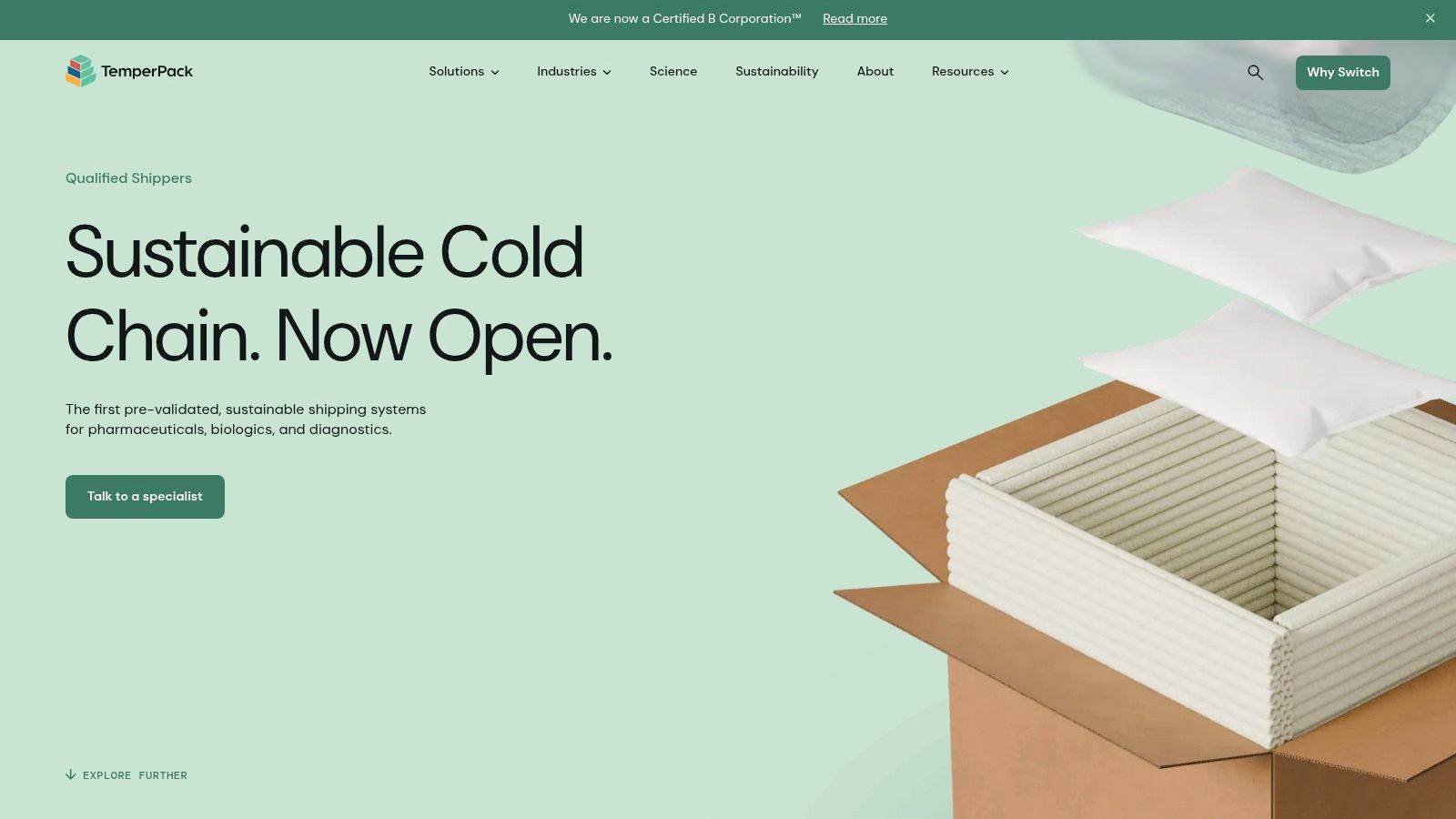
Before dispatch, laboratory teams should align the pack-out with the material's documented storage requirements and the organization's research-only framework. Pro Tec Pep's Research Use Only Policy provides that compliance context, while TemperPack's qualified shipper range addresses the packaging side.
7. Cryopak TemPak and pre-qualified systems
Cryopak covers the widest range of packaging maturity levels in a single supplier relationship. TemPak EPS supports economical overnight and next-day shipments, while VIP and pre-qualified systems such as CryoCube address longer refrigerated or controlled room temperature requirements. Its portfolio also includes PUR, PIR, and ancillary PCM refrigerants.
That makes Cryopak practical for laboratories that need a low-cost option for routine work but don't want to change suppliers when a shipment becomes more demanding. The company also provides parcel-to-pallet solutions, testing capabilities, and related monitoring through sister brands. The choice can therefore develop with the laboratory's shipping program.
Good breadth, uneven information density
The commercial advantage is availability across several price and performance tiers. A small vial moving through a predictable short lane may fit a TemPak configuration, while a shipment exposed to greater uncertainty may need a pre-qualified VIP system. That distinction prevents a common procurement error, paying for high-performance packaging when the route doesn't need it or selecting economy foam without validating the dwell risk.
Cryopak's information can require more work to assemble. Specifications often appear in PDFs rather than one consolidated product page, and many models are RFQ-only. The procurement file should preserve the exact datasheet and pack-out instructions used for approval.
Before selecting a model, teams can review Cryopak's insulated container range and confirm whether Pro Tec Pep's testing information provides the batch and documentation details needed for the material being shipped.
8. Nordic Cold Chain Solutions
Nordic Cold Chain Solutions is less about one flagship shipper and more about the complete pack-out. The company supplies mailers, parcel shippers, pallet systems, gel packs, and ice bricks through its Nordic Ice refrigerant range. That combination can be useful for a laboratory that needs practical access to both the container and the cooling component.
The supplier supports pack-out design for parcel lanes ranging from 24 to 120 hours or more, depending on the insulation, refrigerant, payload, and route. Those duration figures are not interchangeable across products. A standard gel-pack configuration may suit a short shipment, while a longer lane may require VIP insulation or a custom program.
Useful for teams designing the whole shipment
Nordic's main strength is engineering support around sizing and refrigerant placement. That matters for a five-milligram vial because the payload may be physically small but still needs enough coolant coverage, separation, leak protection, and protective structure. A mailer may be efficient for a compact shipment, while a rigid parcel shipper may provide better protection against handling stress.
The trade-off is that the longest durations generally move beyond a basic refrigerant kit. Pricing is mainly quote-based, and e-commerce availability is more limited than the broad product catalog might suggest. Procurement teams should ask for the exact pack-out drawing and route assumptions, not just the name of the insulation.
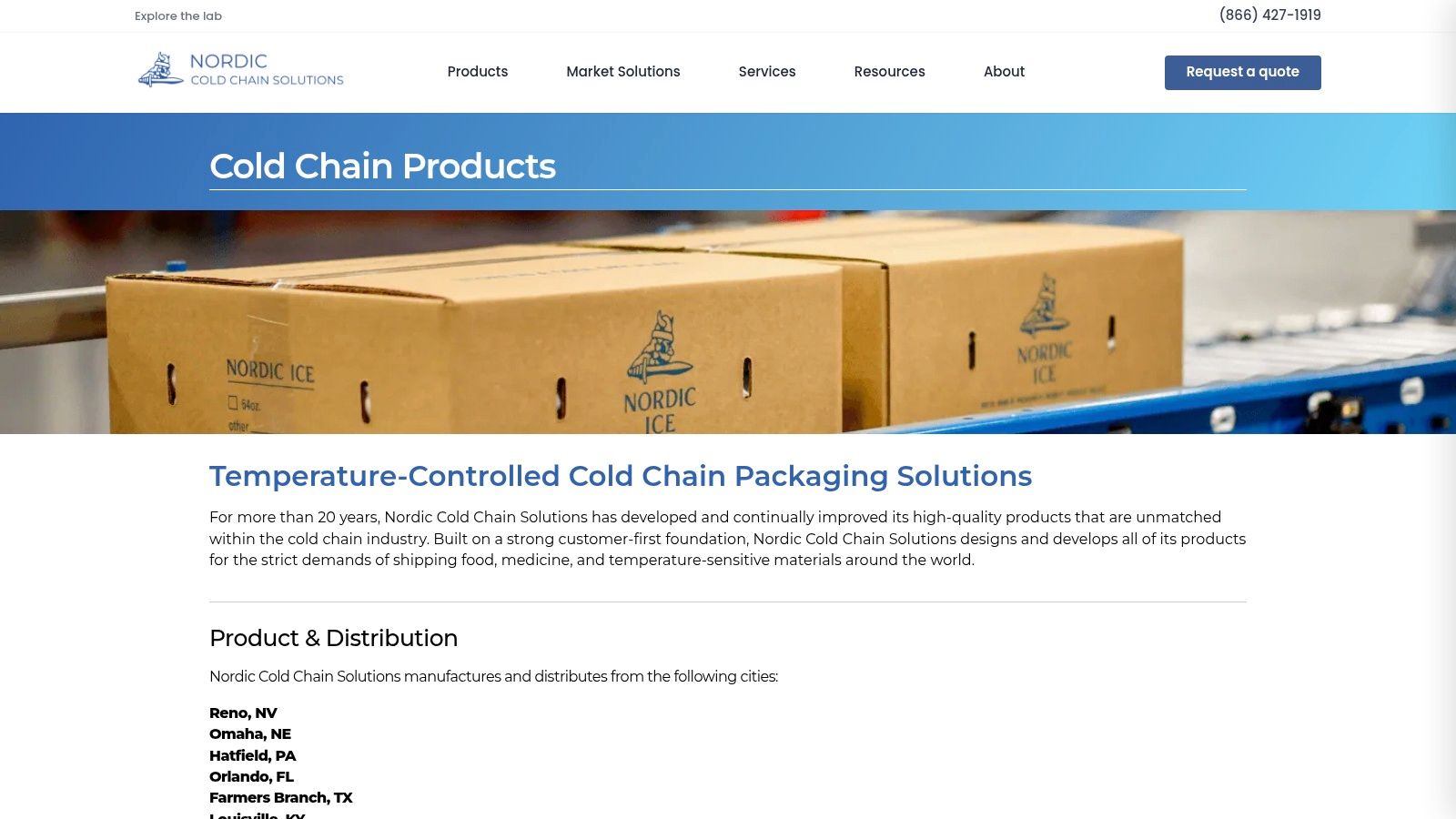
Nordic Cold Chain Solutions is a sensible comparison point when refrigerant availability and hands-on pack-out support matter as much as the box itself. The supplier's value is strongest when the laboratory needs help translating a temperature requirement into a repeatable physical arrangement.
9. Insulated Products Corporation PopupLiner
Insulated Products Corporation's PopupLiner addresses a warehouse problem that premium rigid shippers don't always solve. The liner is compressed for storage and expands when needed, allowing laboratories to keep thermal packaging in a smaller storage footprint. One-piece and two-piece formats support different carton and payload arrangements.
IPC offers pre-qualified 2°C to 8°C shipper options, including a curbside-recyclable paper-liner format. Some paper-liner systems are rated for refrigerated shipping of up to 72 hours, subject to the stated configuration and lane. That places PopupLiner in a useful range for predictable ground shipments rather than extended or deep-frozen routes.
Efficient storage for frequent short lanes
A compressed liner can simplify deployment when a laboratory has limited warehouse space or needs fast pack-outs. The design may also support custom sizing and private-label programs, which can help a recurring research operation standardize the outer carton around its actual vial configuration.
The limitation is thermal scope. IPC isn't the natural first choice for a 96-to-120-hour route or a deep-frozen requirement where VIP and specialty refrigerant systems offer more protection. Newer paper-liner configurations also deserve worst-case lane verification, especially where parcels may sit during weekends or experience repeated handoffs.
IPC's PopupLiner solutions make the most sense when storage efficiency, quick assembly, and a short refrigerated lane define the purchasing problem. The small payload should still be measured before selecting a liner, since the smallest practical configuration may reduce unused volume and simplify refrigerant placement.
10. Polar Tech EPS insulated shippers and ICE-BRIX
Polar Tech is the straightforward economy option in this list. Its catalog includes molded EPS coolers, insulated shipper kits, liners, gel packs, and dry-ice refrigerants. The systems are suited to economical short shipments, especially when the laboratory needs products that industrial distributors can source quickly.
EPS remains familiar because it is simple to assemble and widely available. ICE-BRIX and related gel-pack products provide a practical refrigerant choice for chilled parcels, while dry ice supports frozen applications when the product and transport process allow it. The pack-out guidance is accessible, which can reduce training time for a small laboratory.
Low cost doesn't remove validation work
Polar Tech is most appropriate for predictable 24-to-48-hour shipments where cost and availability outrank compactness. It is less efficient than VIP packaging when the same payload needs extended protection, and the outer package may be larger for a small vial because EPS requires more wall thickness.
Disposal also deserves attention. EPS recycling availability varies by municipality, so the receiving site may not have a convenient recovery route. Procurement teams should include disposal instructions, refrigerant conditioning, and the exact gel-pack arrangement in the shipping SOP.
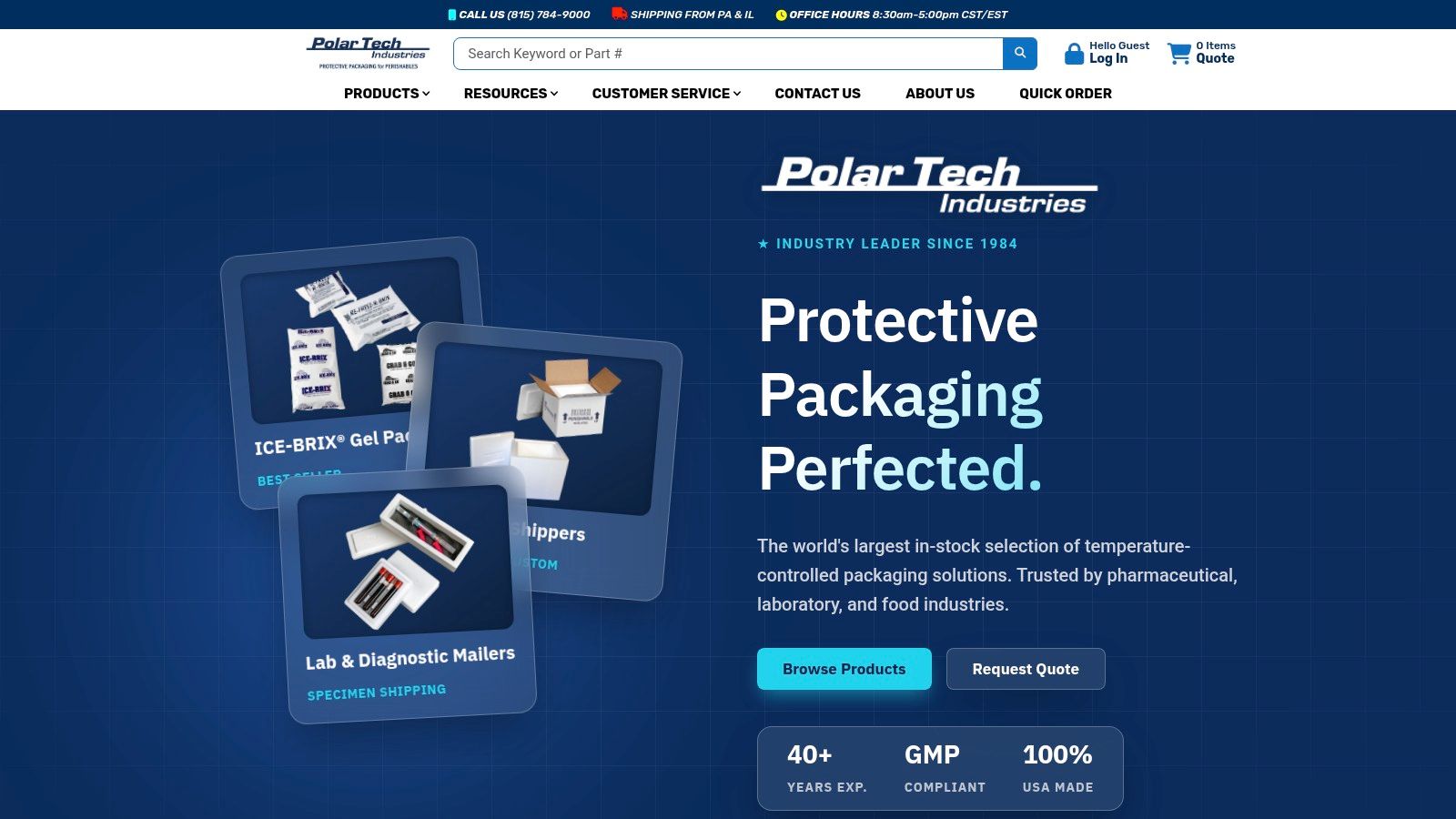
Polar Tech's insulated shipping products fit a laboratory that needs a familiar, quickly sourced pack-out for a short lane. They shouldn't be treated as a universal substitute for a qualified VIP or PCM system when the route includes uncertain dwell or a more demanding temperature profile.
Top 10 Cold Chain Shipping Boxes Comparison
| Product | Core performance & temp profiles ✨ | Duration & handling 🏆 | Quality & docs ★ | Value & pricing 💰 | Best for 👥 |
|---|---|---|---|---|---|
| Peli BioThermal, Crēdo Cube & CoolGuard | ✨ VIP + PCM; 2–8°C, CRT, ≤–18°C, ≤–40°C | Crēdo Cube: 96–168h reusable; CoolGuard: single‑use | ★★★★ 🏆 pharma‑grade configs & US e‑commerce | 💰💰💰 premium; reuse logistics | 👥 Long‑duration, high‑performance research shipments |
| CSafe (Softbox MAX/PRO/EPS) | ✨ VIP + PCM & EPS options; refrigerated → frozen | Up to ≈72h (model dep.); reusable & single‑use | ★★★★ datasheets; global pharma pedigree | 💰💰 variable; many SKUs quote‑only | 👥 Right‑sized pharma lanes & global support |
| Cold Chain Technologies (CCT), EcoFlex / KoolTemp | ✨ Reusable EcoFlex; frozen & ≤–60°C options | 48–144h (profile dep.); reusable programs | ★★★★ strong sustainability & LCA docs | 💰💰💰 mid‑premium; config quotes | 👥 Deep‑frozen & sustainability‑focused research |
| Sonoco ThermoSafe, Certis/Via/Nomadic | ✨ VIP + PCM and seasonal 2–8°C kits; dry‑ice options | Common 24–72h; VIP for extended durations | ★★★★ broad pre‑qualified catalog | 💰💰💰 variable; distributor/RFQ sales | 👥 Standard peptide lanes & distributor channels |
| va‑Q‑tec, va‑Q‑one | ✨ VIP/PCM; 2–8°C → ≤–70°C; high payload efficiency | 96–120+h+ validated ISTA 7D; single‑use | ★★★★★ 🏆 ISTA‑qualified; detailed tech literature | 💰💰💰💰 highest unit cost | 👥 Longest passive duration / compact high‑risk lanes |
| TemperPack, Qualified Shippers | ✨ Paper/plant‑based (Green Cell Foam); compostable options | 36–72h (pre‑qualified ISTA profiles) | ★★★ ISTA‑7E validated; in‑house lab | 💰💰 sustainable, patient‑friendly | 👥 Sustainable short‑to‑mid duration shipments |
| Cryopak, TemPak & pre‑qualified systems | ✨ EPS, PUR, PIR and VIP ranges; PCM options | Overnight → extended VIP; one‑stop spectrum | ★★★★ in‑house testing; RFQ models | 💰💰 (economy → premium) | 👥 One‑stop source: economy to high‑performance |
| Nordic Cold Chain Solutions | ✨ Mailers/parcel/pallet; extensive gel/ice refrigerants | Pack‑outs for 24–120+h (route dep.) | ★★★ practical engineering & pack‑out guidance | 💰💰 accessible refrigerants; quote pricing | 👥 Practical pack‑out design & refrigerant access |
| Insulated Products Corp (IPC), PopupLiner | ✨ Compressed popup liners; curbside‑recyclable options | Up to ~72h refrigerated; fast pack‑outs | ★★★ US chamber testing; quick deployment | 💰💰 cost‑effective ground lanes | 👥 Ground 24–72h lanes; low warehouse footprint |
| Polar Tech, EPS shippers & ICE‑BRIX | ✨ Molded EPS, liners, gel & dry‑ice refrigerants | 24–48h typical (gel/dry‑ice) | ★★★ widely stocked; basic performance | 💰 low cost; fast availability | 👥 Economical short‑duration parcels and quick buys |
Match the Box to the Verified Shipping Profile
The most defensible purchasing process starts with the material, not the supplier catalog. First, define the required temperature range from the product's documented storage information. Common logistics bands include 2°C to 8°C for chilled shipments, 15°C to 25°C for controlled room temperature, and frozen ranges such as -10°C to -25°C, but the product specification controls the decision. A box qualified for one profile shouldn't be assumed suitable for another.
Next, measure the actual payload. A five-milligram vial may need only a small protected cavity, yet the pack-out still requires room for coolant, insulation, secondary containment, cushioning, and any required documentation. Oversizing can create unnecessary material and freight costs. Undersizing can prevent correct coolant placement and leave the vial exposed to movement or direct contact with a refrigerant.
The duration should then be tied to the lane. A nominal hold-time figure is less useful than qualification under the ambient profile, payload, and pack-out that the shipment will experience. ISTA's temperature-controlled transport packaging work, including ISTA 7D, provides a framework for evaluating packaging under defined thermal profiles. Cold-chain packaging qualification guidance explains why qualification data should show how a box and coolant configuration behave under summer and winter conditions.
A practical decision sequence
- Define the temperature: Record the required range and whether the material must remain chilled, controlled at room temperature, frozen, or deep-frozen.
- Measure the payload: Capture the vial or 5 mg pack footprint, secondary packaging, and any required protective space.
- Select the duration: Match the qualified protection window to the complete route, including pickup, sorting, handoffs, weekends, and delivery dwell.
- Review the thermal design: Compare EPS, paper or plant-based insulation, VIP, gel packs, dry ice, and PCM according to the required profile.
- Check the operating model: Confirm whether the laboratory can condition refrigerants correctly, assemble the pack-out consistently, and return reusable assets.
- Preserve the documentation: Keep the product datasheet, qualification profile, pack-out diagram, conditioning instructions, and shipment records together.
The broad trade-offs are clear. EPS remains useful for short, cost-sensitive lanes where quick availability matters. Paper and plant-based formats may be preferable when end-of-life handling carries significant weight. VIP and PCM systems are more appropriate for longer, higher-risk, or space-constrained profiles. Reusable systems can make operational sense when the organization has reliable return logistics and repeated shipment volume.
A box also shouldn't be judged only by its lowest purchase price. Total landed cost includes refrigerants, conditioning, labor, storage space, return freight, asset loss, disposal, and the consequences of a failed shipment. For a small research payload, the best system may be the one that minimizes total operational risk without surrounding the vial with unnecessary volume.
Pro Tec Pep publishes product-level storage details and batch documentation, while optional cold-chain handling can support temperature-sensitive research materials during fulfillment. Procurement teams should verify the exact storage requirement, batch records, and available shipping arrangement with the supplier before ordering. No single cold chain shipping box suits every research material, route, or laboratory workflow.
Pro Tec Pep supplies research-use-only peptides and related compounds with batch-linked documentation, product-level storage information, and optional cold-chain handling. Laboratories planning small-vial shipments can review the available materials and shipping options at Pro Tec Pep before finalizing a packaging workflow.